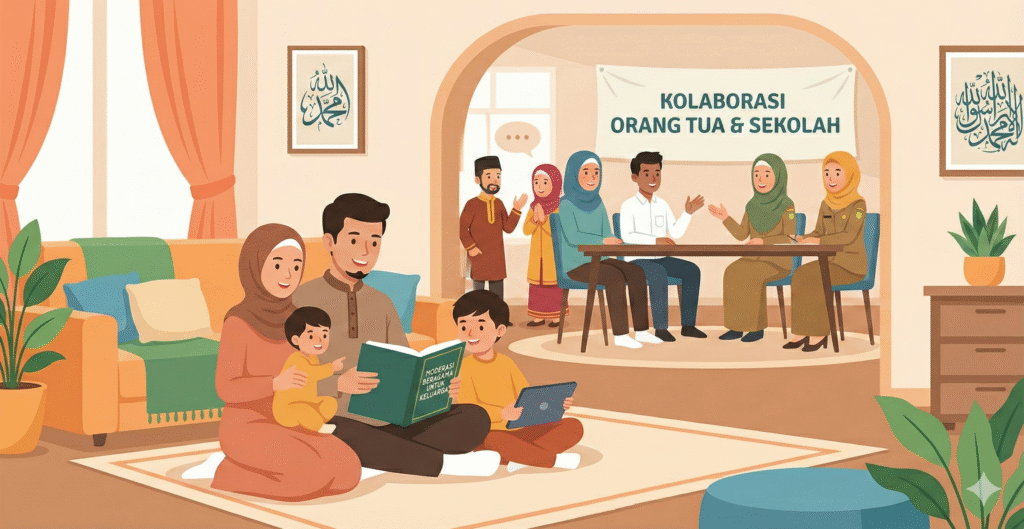
Peran Orang tua dalam Moderasi Beragama, Ketika SDIT Al-Ikhlas Tangerang meluncurkan program “Parent-Teacher Partnership for Moderation” pada semester gasal 2023, ekspektasi awal modest: mungkin 40-50 orang tua dari 320 keluarga yang akan aktif terlibat. Realitanya? 287 orang tua mendaftar untuk parenting workshops, 156 mengikuti family literacy sessions sampai selesai, dan yang paling impresif—73% orang tua melaporkan “percakapan tentang toleransi dengan anak meningkat signifikan” dalam survey 6 bulan. Rahasia kesuksesan bukan program yang sophisticated, tapi recognition simple: peran orang tua moderasi beragama cannot be outsourced ke sekolah—ini shared responsibility yang require genuine partnership.
Research from Universitas Negeri Jakarta (2024) mengonfirmasi apa yang intuitively kita tahu: anak-anak spend rata-rata 6-8 jam di sekolah tapi 16+ jam di rumah dan dengan keluarga. Jika sekolah mengajarkan moderasi tapi di rumah anak terpapar intoleransi—dari orang tua, saudara, atau konten yang dikonsumsi keluarga—school efforts akan undermined. Conversely, ketika sekolah dan orang tua align dalam values dan reinforce each other’s messages, impact multiplied. Data menunjukkan anak dari keluarga yang actively discuss moderasi beragama punya tolerance index 2.3x lebih tinggi dibanding anak yang topik ini tabu atau tidak dibahas di rumah.
Artikel ini mengeksplorasi bagaimana sekolah dan orang tua collaborate effectively: 4 model kerjasama yang proven successful, strategi komunikasi sekolah-rumah, framework family literacy tentang moderasi, plus tips praktis untuk parent-teacher dialogue yang produktif. Baik Anda guru yang ingin engage parents atau orang tua yang ingin support sekolah—panduan ini facilitates partnership yang impactful.
Mengapa Kerjasama Sekolah-Orang Tua Critical untuk Moderasi?
Kerjasama Sekolah-Orang Tua dalam Moderasi Beragama bukan subject yang bisa diajarkan dalam vacuum—ini values system yang harus consistently modeled dan reinforced across contexts. Tiga alasan kerjasama school-home critical.
Pertama, children learn values primarily through observation dan modeling. Bandura’s Social Learning Theory menekankan bahwa children acquire behaviors dan attitudes through observing significant others—terutama parents dan teachers. Ketika orang tua demonstrate respectful interaction dengan neighbors beda agama, atau respond calmly ketika discuss controversial religious topics, anak internalize behaviors ini lebih efektif dibanding classroom instruction saja. Sebaliknya, jika orang tua casual menggunakan slurs atau stereotypes tentang agama lain, anak pick up attitudes ini regardless school teachings.
Kedua, consistency across environments reinforces learning. Cognitive dissonance theory menunjukkan bahwa conflicting messages create confusion dan stress—anak struggle ketika sekolah says “toleransi itu baik” tapi rumah practice intoleransi. They forced choose mana authority to trust, dan often family wins karena emotional bonds deeper. Alignment antara school dan home eliminates dissonance, creating coherent moral framework.
Ketiga, parents know their children best. Teachers see students dalam formal academic context, tapi parents witness anak dalam unguarded moments—fears, prejudices, questions yang mereka embarrassed ask di kelas. Menurut Dr. Siti Maryam Zuhri, pakar parenting Islam dari Universitas Muhammadiyah Jakarta, dalam seminar 2024: “Orang tua adalah first educators dan most influential. Guru mengajarkan konsep, tapi orang tua shape heart dan character. Tanpa partnership, pendidikan nilai seperti bangunan tanpa fondasi—mudah runtuh ketika challenged.”
Partnership bukan berarti parents menjadi assistant teachers—ini mutual collaboration di mana masing-masing punya expertise unik. Sekolah brings pedagogical knowledge, curriculum, dan structured learning. Parents bring intimate knowledge of child’s personality, family context, dan reinforcement dalam daily life.
4 Model Kerjasama Sekolah-Orang Tua yang Efektif
1. Parenting Workshops: Equipping Parents dengan Tools
Model: SDIT Al-Ikhlas Tangerang (2023-2024)
Monthly workshops (2 jam, Sabtu pagi) untuk parents tentang specific aspects of parenting untuk moderasi.
Topics Rotation (12 sessions per year):
- Session 1-2: “What is Moderasi Beragama & Why It Matters” (foundational)
- Session 3-4: “Having Faith Conversations with Children” (communication skills)
- Session 5-6: “Media Literacy untuk Keluarga” (filtering content, discussing news)
- Session 7-8: “When Children Ask Difficult Questions About Religion” (Q&A strategies)
- Session 9-10: “Building Diverse Friendships & Handling Peer Pressure”
- Session 11-12: “Family Rituals yang Reinforce Tolerance” (practical activities)
Format:
- 30 min: Expert presentation (psychologist, ustadz, atau experienced parent)
- 45 min: Small group discussions (6-8 parents) facilitated by trained moderator
- 30 min: Q&A dan take-home activities assignment
- 15 min: Networking (informal coffee/snacks)
Materials Provided:
- Printed handouts dengan summary points
- “Family Conversation Starters” cards—questions to discuss dengan anak
- Resource list (books, websites, apps) untuk further learning
Outcome: Post-workshop surveys consistently show 85%+ parents feel “more confident” discussing moderasi dengan anak. Follow-up 3 bulan: 68% report actually implementing strategies learned.
Key Success Factor: Timing yang family-friendly (weekend mornings), childcare provided untuk younger siblings (jadi orang tua bisa focus), dan non-judgmental atmosphere—not about “perfect parenting” tapi supporting each other.
2. Home-School Communication: Regular Updates & Dialogue
Model: MI Miftahul Huda Semarang (2024)
Structured communication system untuk keep parents informed dan involved dalam moderasi beragama education.
Communication Channels:
Weekly Newsletter (WhatsApp Group):
- Brief update apa yang diajarkan di kelas tentang moderasi minggu ini
- Suggestion untuk parental follow-up: “This week we learned about Prophet’s kindness to non-Muslims. You can reinforce by sharing story of your own positive interaction with neighbor beda agama.”
- Upcoming events atau activities
Monthly Parent-Teacher Conferences:
- Beyond academic progress, specifically discuss child’s social-emotional development terkait tolerance
- Share observations: “Saya notice X comfortable playing dengan teman beda latar belakang” atau concerns jika ada signs intolerance
- Collaborative problem-solving jika issues arise
Digital Portfolio Access:
- Parents bisa access (via app atau website) to child’s work samples terkait moderasi projects, reflections, atau assignments
- Provides window into apa exactly yang anak learn dan how they respond
Feedback Mechanism:
- Anonymous suggestion box (physical atau digital) untuk parents share concerns, ideas, atau questions
- Quarterly “Coffee with Principal” sessions—informal gathering untuk discuss school direction, address parent concerns
Outcome: Parents report feeling “more connected” dengan school’s efforts, dan teachers appreciate parent insights yang help tailor instruction. Issues addressed early sebelum escalate karena communication channels open.
3. Family Literacy Nights: Learning Together
Model: SMPN 12 Surabaya (2023-2024)
Quarterly evening events (18:00-20:00) di mana families come together untuk learning activities tentang moderasi.
Example Event: “Interfaith Story Night” (September 2024)
Activities:
- Storytelling Corner: Guest storytellers dari berbagai agama share folktales atau moral stories dari their tradition yang emphasize universal values (kindness, justice, compassion)
- Craft Station: Families create art project together—e.g., “Tolerance Tree” dengan leaves representing different ways to show respect untuk diversity
- Food Tasting: Potluck style—families bring dishes dari various cultural backgrounds, share dan try new foods (with clear halal/dietary labels)
- Discussion Circles: Parents dan children (separate circles tapi same topic) discuss questions like “What does it mean to agree to disagree?”
Benefits:
- Fun dan engaging: Not lecture-heavy tapi experiential dan interactive
- Intergenerational learning: Parents dan anak belajar side-by-side, creating shared memories
- Community building: Families get to know each other beyond classroom, building school-wide culture of inclusion
Attendance: Average 60-70% families attend (impressive for evening event), feedback overwhelmingly positive—request untuk more frequent events.
Adaptation: Can be done virtually (via Zoom) untuk remote areas atau hybrid untuk accessibility—breakout rooms untuk activities, shared digital board untuk collaborative projects.
4. Parent Volunteer Corps: Active Involvement
Model: MAN 2 Yogyakarta (2024)
Parents become active participants bukan just recipients of information.
Volunteer Opportunities:
Interfaith Event Coordinators:
- Parents dari berbagai agama co-lead planning untuk school’s interfaith dialogue events
- Ensuring diverse representation dan authentic perspectives
Peer Parent Mentors:
- Experienced parents mentor new parents tentang navigating religious education at school
- Especially helpful untuk parents yang concerned about moderasi curriculum—peer influence lebih effective dibanding administrative assurance
Guest Speakers:
- Parents dengan expertise relevant (law enforcement discussing hate crimes, HR professionals discussing workplace diversity, community leaders sharing conflict resolution experiences) present di classes atau assemblies
Resource Library Curators:
- Parents help build dan maintain school library section tentang moderasi, diversity, interfaith—recommending books, curating materials
Social Media Ambassadors:
- Parent volunteers help manage school’s social media untuk showcase moderasi programs, counter misinformation, dan celebrate diversity
Impact: When parents visibly involved dan endorsing programs, buy-in dari parent community wider increases. Also, volunteering deepens parents’ own understanding dan commitment—active participation transforms attitudes lebih dari passive consumption.
Management: Clear volunteer guidelines, training sessions, dan coordinator dari staff untuk ensure quality dan consistency. Recognition program untuk acknowledge volunteers—certificate, spotlight di newsletter, appreciation event.
Peran Orang Tua dalam Moderasi Beragama : Strategi Komunikasi untuk Membangun Partnership
Effective communication adalah foundation of strong school-home partnership. Strategies yang work:
1. Start Early & Be Transparent:
- Introduce moderasi beragama curriculum di parent orientation (awal tahun ajaran) atau admission process
- Explain philosophy, goals, methods—preemptively address potential concerns dengan openness
- Share research atau data showing benefits of moderasi education
2. Use Inclusive Language:
- Avoid jargon yang alienate parents (banyak tidak familiar dengan terms “moderasi beragama”, “wasathiyyah”, dll)
- Frame dalam language accessible: “mengajarkan anak untuk respectful terhadap perbedaan”, “memahami bahwa umat Islam punya berbagai pendapat yang legitimate”
3. Address Concerns Seriously:
- If parents express concern bahwa moderasi = liberal atau compromise aqidah, don’t dismiss as “tidak paham”
- Listen genuinely, acknowledge their values, explain carefully dengan theological grounding
- Offer one-on-one meetings untuk parents yang very concerned—personalized dialogue often resolves fears
4. Highlight Success Stories:
- Share testimonials dari other parents tentang positive impacts mereka observe di anak
- Use data atau anecdotes showing anak yang educated dalam moderasi still strong dalam faith tapi also respectful terhadap others
5. Two-Way Communication:
- Seek parent input—survey tentang apa yang mereka want dari parenting workshops, apa challenges mereka face di rumah
- Implement suggestions when feasible—shows that school values parent voice
Tips Praktis untuk Orang Tua: Menanamkan Moderasi di Rumah
Orang tua tidak need elaborate programs—small consistent actions powerful. Practical tips:
1. Model Behavior:
- Be intentional tentang bagaimana Anda speak tentang atau interact dengan people beda agama/backgrounds
- Anak watching—if you’re respectful, they learn; if you’re prejudiced, they absorb
2. Create Safe Space untuk Questions:
- Encourage anak ask anything tanpa fear of punishment atau dismissal
- Respond dengan honesty dan nuance, not simplistic “benar-salah”
3. Leverage Teachable Moments:
- When anak encounter diversity (teman baru, news event, book character), pause untuk discuss: “Apa yang kamu notice? Apa yang sama/beda? How would you feel?”
4. Diversify Media Consumption:
- Read books atau watch shows featuring characters dari diverse backgrounds
- Discuss stereotypes if you notice them—”What did you think about how this character was portrayed?”
5. Encourage Diverse Friendships:
- Support anak’s friendships across religious/cultural lines—invite friends over, participate dalam their celebrations (dalam bounds yang appropriate)
- Don’t forbid relationships based on religion alone—this sends clear intolerance message
6. Family Service Projects:
- Volunteer together untuk causes yang benefit diverse communities—build empathy dan connections
- Discuss together tentang apa yang learned from experience
7. Pray for Understanding:
- In family doa time, pray for wisdom untuk understand others, patience dengan perbedaan, dan courage untuk stand untuk justice
- This frames moderasi bukan as secular value tapi spiritual imperative
Mengatasi Challenges dalam Partnership
Challenge 1: Orang Tua Terlalu Sibuk atau Tidak Engaged
Realistis: Tidak semua parents punya waktu atau interest untuk workshops atau intensive involvement.
Solusi: Offer low-barrier options—online resources yang bisa accessed anytime, short video tips (5 min) di WhatsApp, one-page handouts. Quality over quantity—even small engagement better than none. Also, recognize that parents’ primary contribution adalah home environment, not attending school events—support them in that role.
Challenge 2: Diverse Parent Body dengan Differing Views
Some parents very conservative, others liberal—consensus impossible.
Solusi: Focus pada core shared values yang everyone agree: kita semua want anak yang berakhlak, hormat, bertanggung jawab. Frame moderasi dalam terms ini, not political labels. Respect differences dalam how families practice faith, tapi clear pada boundaries: hate speech atau discrimination not acceptable.
Challenge 3: Language atau Literacy Barriers
Some parents tidak comfortable Bahasa Indonesia formal, limited education, atau literacy challenges.
Solusi: Multilingual materials jika needed (regional languages), visual-heavy resources (infographics, videos), in-person verbal communication for important updates, dan peer parent mentors dari similar backgrounds yang bisa explain dalam accessible way.
Kesimpulan
Kerjasama sekolah-orang tua dalam moderasi beragama bukan luxury tapi necessity. Anak-anak thrive ketika significant adults dalam lives mereka aligned dalam values dan mutually reinforcing positive messages tentang tolerance, pluralisme, dan respectful disagreement.
Key insights untuk schools dan parents:
- Partnership requires intention: Tidak happen organically—sekolah harus deliberately create structures dan opportunities for involvement
- Communication is foundational: Transparent, regular, two-way communication builds trust dan alignment
- Multiple engagement models: From intensive workshops to low-barrier newsletters—offer options yang accommodate diverse parent circumstances
- Parents as assets not obstacles: Frame parents sebagai partners dengan valuable contributions, not just people to convince atau manage
- Small consistent actions compound: Parents tidak need be perfect—modeling respect, creating safe conversations, leveraging teachable moments—ini powerful over time
Ketika sekolah dan orang tua work together dengan kurikulum moderasi beragama yang solid, metode pembelajaran yang engaging, dan pendidikan karakter yang comprehensive, anak receive consistent messages yang shape hearts dan minds. Partnership ini adalah foundation untuk sustainable moderasi beragama di Indonesia—one family, one school, one community at a time.
Untuk melengkapi partnership ini, pastikan sekolah juga leverage pelatihan guru yang adequate, implement assessment yang robust, dan create lingkungan pendidikan yang holistically support moderasi. Integration dari semua elemen ini creates ecosystem di mana anak not just taught tentang tolerance tapi truly live it.
FAQ: Kerjasama Sekolah-Orang Tua
Q1: Bagaimana sekolah bisa engage orang tua yang skeptical atau menolak moderasi beragama karena khawatir ini akan “meliberalkan” anak mereka?
A: Ini concern yang legitimate dari perspektif mereka—fear tentang compromising faith adalah real dan harus addressed dengan empathy, not dismissiveness. Strategies:
(1) Private conversations first—jangan address di forum publik yang bisa make them defensive. One-on-one meeting dengan principal atau trusted religious teacher dari sekolah,
(2) Use religious framing—explain moderasi dalam Islamic terms mereka familiar: wasathiyyah (QS. Al-Baqarah 2:143), rahmatan lil alamin (QS. Al-Anbiya 21:107), ukhuwwah basyariyyah. Show bahwa ini bukan Western liberal import tapi core Islamic values,
(3) Differentiate moderation from liberalism—clarify: Moderasi bukan tentang relativisme atau “semua agama sama”. Ini tentang adab (etika) dalam interaksi dengan yang berbeda, bukan about theology. Strong aqidah dan respectful muamalah not mutually exclusive,
(4) Provide evidence—share data atau testimonials dari Islamic schools atau ulama credible yang support moderasi. Reference NU, Muhammadiyah positions,
(5) Offer opt-in not opt-out—for specific activities yang controversial (e.g., interfaith dialogue yang involve direct interaction dengan non-Muslim religious figures), allow parents opt their child out dengan alternative assignment. Shows respect untuk boundaries sambil maintaining program integrity untuk majority,
(6) Be patient—attitude change takes time. Some parents akan never fully agree—that’s okay. Goal adalah maintain dialogue dan ensure their children still safe dan respected at school. Over time, as they see positive outcomes di anak (strong faith + respectful attitude), fears may ease. Remember: We share same goal (raising righteous children)—just different understanding tentang how. Find common ground there.
Q2: Orang tua saya sendiri cenderung intolerant dan sering buat komentar prejudice tentang agama lain di rumah. Sebagai guru, bagaimana saya bisa help anak dari keluarga ini tanpa alienating parents atau undermining their authority?
A: Ini delicate situation—Anda harus balance respecting parental authority dengan fulfilling professional obligation untuk educate all children in tolerant values. Approaches:
(1) Focus on school environment yang Anda bisa control—create classroom culture yang strongly model respect dan tolerance. For children dari intolerant homes, school may be only place they see different modeling—make it count,
(2) Teach critical thinking, not just “correct” attitudes—instead of saying “Your parents are wrong”, teach anak to question any statement: “What’s the evidence? Are there other perspectives? Who benefits dari this belief?” Give them tools untuk think for themselves—eventually they’ll apply to what they hear at home,
(3) Private conversations dengan anak (appropriate age)—if older students (SMA) bring up parents’ prejudiced comments, can gently discuss: “Different people have different experiences that shape views. It’s okay untuk respectfully disagree dengan parents on some things while still honoring them.” Younger children, focus on “At school we practice respectful language about everyone”,
(4) If egregious: Intervene carefully—if child’s home environment causing them distress atau they acting out parents’ prejudice harmfully (bullying others), may need involve counselor atau carefully approach parents. Frame as concern untuk child’s wellbeing: “We’ve noticed X seems stressed/confused about Y. Would love to chat about how school dan home can support them together”,
(5) Recognize limits—Anda cannot undo completely what happens di rumah selama puluhan jam per week. But research shows even one caring adult yang models different values can be protective factor. Be that person. Plant seeds even jika tidak see immediate harvest,
(6) Self-care—it’s emotionally draining to witness children being taught intolerance. Find support among colleagues, remember why you do this work, dan celebrate small wins (e.g., saat anak dari intolerant family shows moment of empathy atau questioning).
Q3: Bagaimana mengukur apakah kerjasama sekolah-orang tua dalam moderasi beragama actually effective? Apa indikator konkret yang bisa ditrack?
A: Measuring partnership effectiveness requires multi-method approach karena outcomes both quantitative dan qualitative:
(1) Participation Metrics—track berapa parents attend workshops, respond to newsletters, volunteer, participate in events. Increasing attendance over time = good sign, though low attendance doesn’t necessarily mean failure (quality matters over quantity),
(2) Parent Surveys (Bi-annual)—assess: (a) Parents’ own tolerance attitudes (use standardized scales seperti Religious Tolerance Scale), (b) Parents’ confidence dalam discussing moderasi dengan anak (Likert scale 1-5), (c) Parents’ perception of school’s moderasi programs (satisfaction, relevance, clarity), (d) Parents’ report of home discussions about tolerance (frequency, depth),
(3) Student Outcomes (Pre-Post each year)—measure students’ tolerance attitudes, behaviors (peer nominations for inclusive behaviors), dan academic knowledge about moderasi. If strong school-home alignment, students should show greater gains dibanding schools dengan weak parental involvement,
(4) Behavioral Indicators—track incidents of bias-based bullying atau conflicts. Decrease over time suggests programs working (though external factors juga influence, so tidak purely causal),
(5) Qualitative Testimonials—collect stories dari parents tentang positive changes mereka observe: “My child now questions stereotypes they see on TV”, “We had great conversation about why we respect neighbors who celebrate differently”. These narratives powerful complement to numbers,
(6) School Climate Surveys—sense of belonging, safety, untuk students dari diverse backgrounds. If minoritized students feel increasingly safe dan included, partnership succeeding,
(7) Longitudinal Tracking—ideal (though resource-intensive): follow cohort of students dari elementary hingga graduation. See if those yang experienced strong school-home partnership maintain tolerance attitudes into young adulthood. Benchmark realistic: Expect gradual improvement over 2-3 years, bukan dramatic overnight change. Successful partnership akan show steady positive trends across multiple indicators, even jika tidak perfect scores. Also measure process indicators (e.g., “Are communication channels actually used?” “Do parents feel heard?”)—strong processes predict good outcomes even if outcomes take time to manifest.